Tuesday, 25 July 2017

Gold prices down in Asia on cautious trade as Fed views awaited - Sean Seshadri

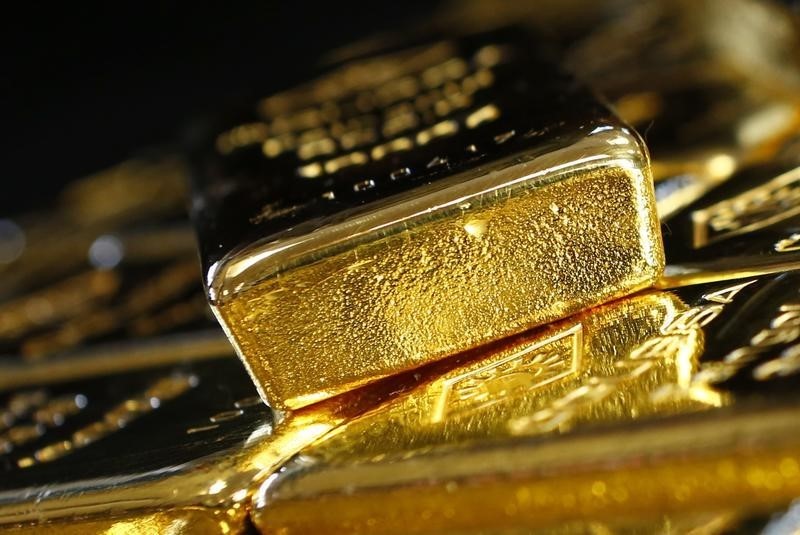
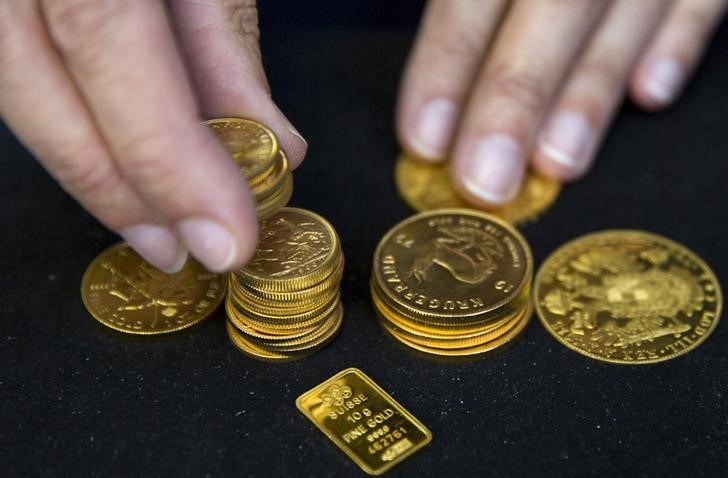
Gold futures dipped in Asia on Wednesday with sentiment on edge ahead of the latest review of interest rates by the Fed.
Comex gold futures fell 0.36% to $1,247.64 a troy ounce.
The U.S. dollar index, which measures the greenback’s strength against a trade-weighted basket of six major currencies, rose by 0.11% to 93.92.
The Federal Reserve Open Market Committee (FOMC) got its two-day policy meeting underway on Tuesday amid expectations the central bank will leave interest rates unchanged.
Investors, however, will parse the policy statement on Wednesday for fresh insight into the central bank’s thinking on monetary tightening.
© Reuters. Gold dips in Asia
Following its decision to raise rates in June for the second time this year, the Fed said that the slowdown in inflation was transitory and signaled its intention to raise rates at least once more this year.
Overnight, gold prices slipped from their highest level in around a month in North American trade on Tuesday, as market players looked ahead to the Federal Reserve's policy meeting for any new insight on the timing of the next U.S. rate hike and clues on how the central bank plans to pare back its balance sheet.
Gold prices finished a few cents lower on Monday, ending a six-session win streak.
The U.S. dollar sank to a fresh 13-month low against a basket of the other major currencies, with traders skeptical the outcome of the Fed's meeting would do much to alter the greenback's recent weak trend.
Focus will also be on headlines coming out of Washington, where the Senate is expected to continue working to repeal Obamacare. The investigation into U.S. President Donald Trump campaign's ties to Russia will continue to get attention.
Gold has been well-supported in recent sessions as ongoing political turmoil in the White House and weakness in the U.S. dollar spurred haven demand for the precious metal.

Sean Seshadi - Oil on rise for second day after Saudi, Nigerian pledges

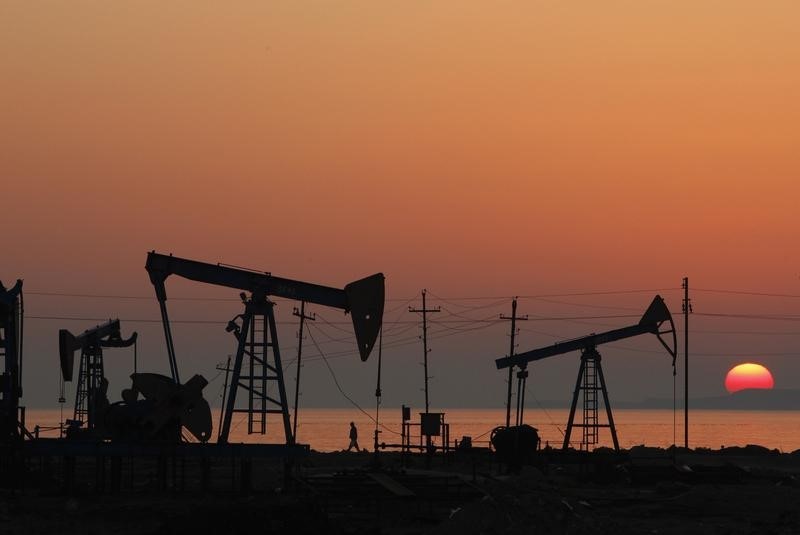
  • Oil futures are on the rise again today on new hopes for market balance, a day after an OPEC meeting that drew promises from Saudi Arabia and Nigeria to cut back on exports and production.
  • Light sweet crude is up 0.6% in Globex electronic trading, to $46.62/barrel, and Brent crude is up 0.6% to $48.87 in London trading.

  • © Reuters.  Oil on rise for second day after Saudi, Nigerian pledges

  • Production cuts are having a mild impact so far, but Chinese demand is still in play and the country is aggressively building stockpiles, says Energy Aspects.

Thursday, 13 July 2017

Sean Seshadri - Gold nears 1-week high as markets bet on patient Fed

Gold prices edged higher in European trade on Thursday, nearing a one-week high following Federal Reserve Chair Janet Yellen's congressional testimony to gradually raise interest rates.
Comex gold futures were at $1,222.49 a troy ounce by 3:18AM ET (0718GMT), up $3.40, or around 0.3%.
Prices tallied a third-straight gain Wednesday after Yellen sounded cautious on inflation and noted the Fed would not need to raise rates "all that much further" to reach current low estimates of the neutral funds rate.
She also said that the U.S. economy is healthy enough for the Fed to begin winding down its massive $4.5 trillion balance sheet at some point this year.
The speech was seen as mainly dovish by market participants.
The dollar index traded down almost 0.3% at 95.31 in early trade, not far from the nine-month low of 95.22 plumbed in late June.
© Reuters.  Gold trades near 1-week high
Yields of the benchmark 10-year U.S. Treasury fell to 2.32%, well off highs near 2.39% touched last week.
Investors now looked ahead to more comments from the Fed chair, will testify for a second day on the institution's monetary policy in front of the House Financial Services Committee at 10:00AM ET (1400GMT).
Besides Yellen, Thursday's calendar also features PPI inflation data and weekly jobless claims, both due at 8:30AM ET (1230GMT). Monthly CPI data is due Friday.
The Fed hiked rates at its June meeting and stuck to its forecast for one more rate hike this year, but the subdued inflation outlook has since raised doubts over whether the U.S. central bank will be able to stick to its planned tightening path.
Futures traders are pricing in around a 40% chance of a hike by the end of the year, according to Investing.com’s Fed Rate Monitor Tool.
The precious metal is sensitive to moves in U.S. rates, which lift the opportunity cost of holding non-yielding assets such as bullion.
Also on the Comex, silver futures tacked on 2.2 cents, or roughly 0.2%, to $15.90 a troy ounce.
Among other precious metals, platinum was up 0.4% at $922.20, while palladium was little changed at $861.30 an ounce.

Wednesday, 12 July 2017

Sean Seshadri - Tariff fight roils Argentina’s shale patch as Macri opens trade

Argentina needs oil rigs to develop its vast shale oil and gas resources. The United States has plenty of idle equipment laying around after its own unconventional drilling boom cooled.
But moving that machinery from the plains of Texas to the windswept Patagonian desert is proving complex and costly for global oil majors who say Argentina's protectionist past is slowing efforts to spark its own shale revolution.
A move by Argentina's government to cut import taxes on used oil-field equipment has sparked fierce opposition from local manufacturers, who are lobbying the government to include protections for them in a measure they fear will destroy their livelihoods.
Among them is Adrian Ramos, president of QM Equipment, a manufacturer of drilling and fracking equipment located in the Argentine coastal city of Mar del Plata.
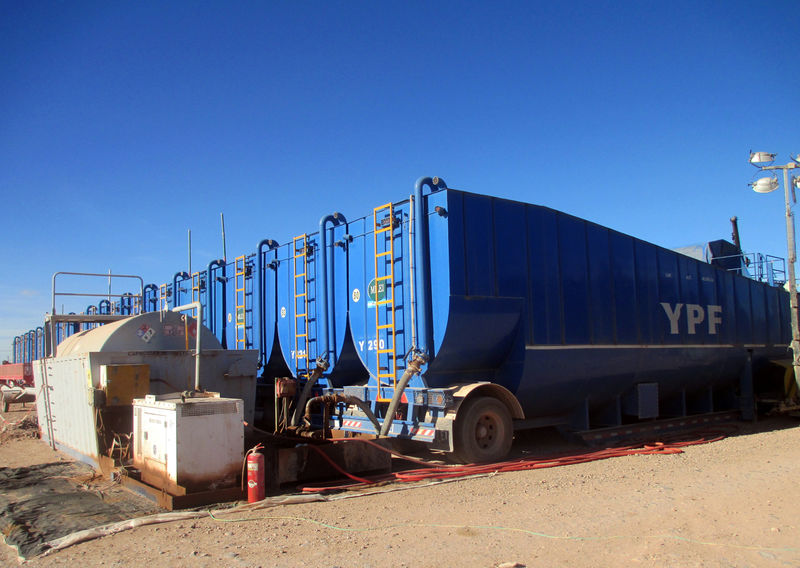
© Reuters. Trucks unload water to be used in the shale oil and gas extraction fracking process in the Loma Campana Vaca Muerta shale oil and gas drilling site
"We got in touch with [the Production Ministry] and let them know it was totally impossible for us to survive this," Ramos told Reuters in a telephone interview.
Negotiations with Ramos and others have slowed the rollout of tariff reductions. President Mauricio Macri in April had promised oil executives the changes would be coming within "weeks."
The previously unreported talks with local manufacturers underscore the challenges faced by Macri, who came to power in 2015 on a wave of popular discontent that ended 12 years of leftist rule. The market-friendly former businessman has pledged to revive Argentina's moribund, inflation-racked economy by reducing trade barriers and wooing foreign investment.
But he has gotten blowback from industries and unions that have benefited from protectionist policies. With mid-term elections approaching in October, popular opposition to rising imports and factory layoffs has become a vulnerability for Macri's "Let's Change" coalition.
Big oil firms, meanwhile, are fuming too.
Vaca Muerta, a Belgium-sized shale formation located in the western Patagonian province of Neuquen, is seen as the most promising unconventional oil and gas field outside of North America, the birthplace of the shale revolution.
Already burdened with pricey labor and transport costs in Argentina, companies have grown frustrated with delays in the equipment import reform.
Speaking at an industry event in Buenos Aires in late June, Richard Spies, chief executive of Pan America Energy, an Argentine subsidiary of BP (LON:BP) PLC, called on government officials to hit the accelerator.
"Get these things done," Spies said. "We need that equipment that's idle in the United States moved down here to facilitate the developments that are coming in Vaca Muerta."
In an emailed response to questions from Reuters, a Production Ministry spokesman said the import proposal was advancing and a decree would be passed by the executive branch in the coming weeks. It would not need congressional approval, the spokesman said.
BRINGING THE "DEAD COW" TO LIFE
Argentina is one of many resource-rich Latin American countries that have struggled to develop abundant oil and mineral reserves. Rules aimed at protecting domestic players and guaranteeing large revenues for government have chased away some foreign investors.
New right-leaning governments in the region have introduced business-friendly policies to lure them back. Brazil's Congress in 2016 opened the nation's deepwater pre-salt fields to foreign operators. This year Peru lowered air-quality standards to attract mining investment.
Spurring development of Vaca Muerta - Spanish for 'Dead Cow' - is one of Macri's major priorities as he tries to unwind regulations put in place by his predecessor Cristina Fernandez.
Argentina holds the world's second-largest shale gas reserves, but it imports a quarter of its energy needs, one reason for the country's $7-billion current account deficit.
Macri has promised rail and pipeline projects to connect remote Vaca Muerta to markets and ports. Most crucially, he struck a deal with unions in January to reduce notoriously high labor costs.
Still, production costs remain well above those of global competitors. Prices at the Loma Campana field, jointly operated by state-run oil company YPF SA and Chevron Corp (NYSE:CVX) exceed $43 per barrel, compared with $32 in the Niobrara in Colorado and Wyoming.
(For a look at Argentine shale activity, see http://tmsnrt.rs/2uPm98U)
Used oil equipment can currently be imported at tariffs ranging from 7 percent to 28 percent, with imports of some types of machinery banned, the Energy Ministry said in an emailed statement to Reuters.
The proposed change would eliminate the bans, lower tariffs to between 0 percent and 7 percent and provide a form of compensation for companies that buy locally produced equipment, the Ministry said. It added that it has been meeting with drillers, oil services companies and local manufacturers about the rule.
"Evidently this dialogue process has taken time," a ministry spokesman wrote. "We expect the decree to be signed soon."
COMPETE OR 'DISAPPEAR'
Local companies fear the changes could be devastating.
Everaldo Santa Cruz is head of the oil and gas business at HTI SA, a maker of drilling and hydraulic fracturing equipment in Canuelas, Buenos Aires province. He said HTI has invested heavily in building frac pumps to supply drillers in Vaca Muerta, and that the $1.2 million price tag is comparable with that of U.S. manufacturers.
But Santa Cruz said he worries he will never get to fully develop that part of his business if the decree is passed. HTI doesn't stand a chance if his customers are allowed to import equipment they already own from the United States, paying only transport costs and the lowered tariffs, he said.
"We understand that it can speed up production to an extent," Santa Cruz said. "But there's a risk that companies like ours that try to develop local solutions to support the industry simply disappear."
Tuesday, 11 July 2017

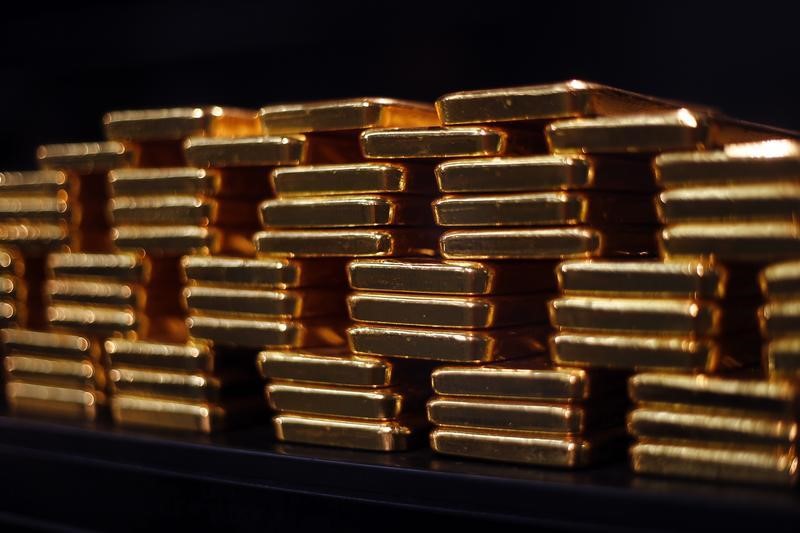
Sean Seshadri - Gold edges lower, moving back toward 4-month lows ahead of Yellen

Gold prices edged lower in European trade on Tuesday, moving back towards the lowest level in around four months as investors awaited comments from Federal Reserve Chair Janet Yellen for fresh cues on policy direction.
Comex gold futures were at $1,209.65 a troy ounce by 3:45AM ET (0745GMT), down $3.60, or around 0.3%. Prices saw a modest bounce back on Monday after touching their lowest since March 15 at $1,204.00.
Fed Chair Janet Yellen is set to deliver her semi-annual monetary policy testimony on the economy before Senate and House committees in Washington DC later this week.
Yellen is scheduled to testify on the economy before the Senate Banking Committee at 10:00AM ET (1400GMT) Wednesday. On Thursday, she will appear in front the House Financial Services Committee also at 10AM ET.
© Reuters.  Gold moves back toward 4-month lows ahead of Yellen
Her comments will be monitored closely for any new insight on the timing of the next U.S. rate hike and clues on how the central bank plans to pare back its massive balance sheet.
San Francisco Fed President John Williams said Tuesday in Sydney that it was a reasonable view to expect one more rate hike this year, and his own view was to start adjusting the central bank's balance sheet in the next few months.
Later in the day, Fed Governor Lael Brainard was due to speak in New York.
The Fed hiked rates at its June meeting and stuck to its forecast for one more rate hike this year, but the subdued inflation outlook has since raised doubts over whether the U.S. central bank will be able to stick to its planned tightening path.
Futures traders are pricing in around a 50% chance of a hike by the end of the year, according to Investing.com’s Fed Rate Monitor Tool.
The precious metal is sensitive to moves in U.S. rates, which lift the opportunity cost of holding non-yielding assets such as bullion.
Also on the Comex, silver futures shed 14.7 cents, or roughly 1%, to $15.48 a troy ounce, after sliding to $15.14 a day earlier, a level not seen since April 2016.
Among other precious metals, platinum was down 0.5% at $897.50, while palladium rose 0.3% to $839.48 an ounce.

Monday, 3 July 2017

Gold down in Asia after surprise upbeat Caixin June PMI - Sean Seshadri

Gold dipped in Asia on Monday after a surprise upbeat reading in the China Caixin PMI in June.
Gold for August delivery fell 0.33% to $1,238.17 a troy ounce on the Comex division of the New York Mercantile Exchange.
Caixin's China manufacturing PMI for June beat expectations, offering hope the world's second-largest economy continues to defy expectations for a slowdown.
The private survey came in at 50.4, marking a three-month high. It was up from May's 49.6, which was an 11-month low, and beat a Reuters poll forecast for 49.5.
Last week, gold prices were lower at the close on Friday and posted their first weekly decline since March as a rise in global bond yields curbed investor demand for the precious metal.
© Reuters.  Gold down in Asia
The precious metal still ended the first half of the year with a gain of 8%, boosted by a decline in the dollar to its lows of the year.
Gold prices came under pressure amid indications that several major central banks around the world are getting ready to join the Federal Reserve in tightening monetary policy.
Investor expectations mounted for tighter monetary policy across the globe after the heads of the European Central Bank, the Bank of England and the Bank of Canada adopted a more hawkish view on monetary policy.
Hawkish signals from foreign central banks contrasted with doubts over whether the Federal Reserve will be able to hike rates again this year given a recent batch of weak U.S. economic data and growing skepticism that the Trump administration will be able to deliver on its pro-growth agenda.
Benchmark U.S. Treasury yields and German 10-year government bond yields hit five-week highs and the euro hit 14-month peaks as investors assessed the likelihood that the ECB could soon start to unwind its quantitative easing program.
Gold is highly sensitive to rising rates, which lift the opportunity cost of holding non-yielding assets such as bullion, but weakness in the dollar in which it is priced, has been offsetting the impact of higher yields.
Higher yields tend to increase the opportunity cost of purchasing commodities that don’t bear a yield.
In the week ahead, investors will be focusing on Wednesday’s minutes of the Fed’s latest meeting for fresh cues on the timing of the next U.S. rate hike. Friday’s U.S. jobs report for June will also be closely watched.

Tuesday, 27 June 2017

Gold recovers from 6-week lows ahead of Yellen speech - Sean Seshadri

Gold prices edged higher in European trade on Tuesday, recovering from the prior session's six-week low as market players looked ahead to comments from Federal Reserve Chair Janet Yellen for further signs of the central bank's likely rate hike trajectory through the end of the year.
Comex gold futures were at $1,251.60 a troy ounce by 3:05AM ET (0705GMT), up $5.10, or around 0.4%. It fell to its lowest since May 17 at $1,236.50 a day earlier.
Gold fell sharply Monday, with prices marking their first decline in four sessions, as a large sell order and a stronger dollar hit sentiment.
Also on the Comex, silver futures ticked up 6.5 cents, or roughly 0.4%, to $16.63 a troy ounce, recovering from the prior session's seven-week low of $16.22.
© Reuters.  Gold recovers from 6-week lows
Fed Chair Janet Yellen is due to speak about global economic issues at the British Academy's 2017 President's Lecture in London at 1:00PM ET (1700GMT) on Tuesday. Audience questions are expected.
Her comments will be monitored closely for any new insight on policy and the timing of when the Fed will next raise interest rates. The Fed chair could be asked about the U.S. central bank's plan to start shrinking its massive balance sheet, which ballooned to $4.5 trillion in wake of the financial crisis.
Besides Yellen, a pair of Fed policymakers are due to make public appearances on Tuesday that may offer further insight into the debate among policymakers on the likelihood of higher interest rates in the months ahead.
Philadelphia Fed President Patrick Harker is set to speak about the economic outlook and international trade at the European Economics & Financial Centre, in London, while Minneapolis Fed Chief Neel Kashkari will speak at a town hall event in Michigan.
The Fed raised interest rates for the second time this year earlier in June and maintained plans to go ahead with another rate hike by year-end. Despite the Fed's message, market players remained doubtful over the central bank's ability to raise rates as much as it would like in the coming months due to softening inflation.
Futures traders are pricing in less than a 15% chance of a hike at the Fed's September meeting, according to Investing.com’s Fed Rate Monitor Tool. Odds of a December increase was seen at about 35%.
Gold is sensitive to moves in U.S. rates, which lift the opportunity cost of holding non-yielding assets such as bullion.
Among other precious metals, platinum inched up 0.7% to $924.15, while palladium added 0.3% to $866.52 an ounce.

Thursday, 22 June 2017

Gold gains in Asia on safe-have demand from China - Sean Seshadri

Gold held gains in Asia on Friday on safe-have demand from China as borrowing by some major private firms to buy assets overseas comes under the scanner of the country's bank regulator.
Reports overnight said China's banking regulator had asked large lender to check credit risk profiles of several companies that had borrowed heavily in greenbacks to buy assets abroad. But details were sparse and there was no immediate indications on the extent of exposure. China regularly vies with India as the top importer of gold.
Gold futures for August delivery on the Comex division of the New York Mercantile Exchange rose 0.25% at $1,252.55 a troy ounce.
© Reuters.  Gold up in Asia
Overnight, gold prices remained on track to end higher for a second-straight session, as subdued weekly initial jobless claims data undershot expectations, helping the precious metal shrug off expectations that the Federal Reserve may hike rates later this year.
The latest weekly update on initial jobless claims failed to impress market participants, showing that the number of Americans filing for unemployment benefits increased slightly last week.
Initial claims for state unemployment benefits increased 3,000 to a seasonally adjusted 241,000 for the week ended June 17, the Labor Department said on Thursday.
Analysts were expecting Initial jobless claims to increase by only 2000 to 240,000.
The move higher in gold prices comes in the wake of a recent shift in sentiment towards safe havens, after oil prices fell to multi-month lows this week.
Some analysts expect, however, that expectations that the Federal Reserve could raise rates later this year will cap upside momentum.
"If the Fed were to follow a more aggressive approach, this could preclude any significant rise in gold prices for the rest of the year," Commerzbank (DE:CBKG) analysts wrote in a recent note to clients.

Wednesday, 21 June 2017

UPDATE 2-Oil languishes near multi-month lows on glut fears - Sean Seshadri

Oil prices held near multi-month lows on Wednesday as investors discounted evidence of strong compliance by OPEC and non-OPEC oil producers with a deal to cut a global output.
Global benchmark Brent LCOc1 was unchanged at $46.02 barrel at 0651 GMT after falling nearly 2 percent in the previous session to its lowest settlement since November.
U.S. crude futures CLc1 for August were trading up 4 cents at $43.55, after spending much of the day slightly lower and falling more than 2 percent on Tuesday to the lowest since September.
Compliance with an agreement by the Organization of the Petroleum Exporting Countries and other producers to cut output by 1.8 million barrels per day (bpd) for six months from January reached its highest in May since curbs were agreed last year. lack of a positive response in oil prices clearly suggests market participants are not convinced that the OPEC's efforts will help shore up prices in a meaningful way in the short-term as shale supply continues to rise in the U.S.," said Fawad Razaqzada, market analyst at futures brokerage Forex.com.
© Reuters.  UPDATE 2-Oil languishes near multi-month lows on glut fears
"Unless we see a marked reduction in crude stockpiles, the possibility of further short term falls in the price of oil cannot be ruled out," he added.
The American Petroleum Institute said on Tuesday U.S. crude stockpiles had dropped more than forecast. U.S. crude stocks fell last week, while gasoline and distillate inventories rose. API/S
A government report is due at 10:30 a.m. EDT (1430 GMT) on Wednesday and the official figures often differ sharply from those of the industry group.
OPEC and non-OPEC oil producers' compliance with the output deal reached 106 percent in May, a source familiar with the matter said on Tuesday.
OPEC compliance with the output curbs in May was 108 percent, while non-OPEC compliance was 100 percent, the source said. Another source confirmed compliance by all producers in May was 106 percent.
While compliance is high, it is what went on before the production cut that counts, BMI Research said in a note.
"A number of producers - notably Iraq, Saudi Arabia and Russia - aggressively ramped up output in the run up to the deal, fast-tracking projects, expanding drilling programmes and deploying spare capacity," BMI said.
Thus the production cut is not costless and "should prices relapse again, OPEC has much less in its arsenal with which to respond."

Monday, 19 June 2017

Crude Oil Futures - Weekly Outlook: June 19 - 23 - Sean Seshadri

Oil futures settled a bit higher on Friday, but prices still suffered their fourth straight weekly loss as the market weighed rising U.S. drilling against ongoing efforts by major producers to cut output to reduce a global glut.
The U.S. West Texas Intermediate crude July contract inched up 28 cents, or around 0.6%, to end at $44.74 a barrel by close of trade Friday. It touched its lowest since May 5 at $44.22 on Thursday.
Elsewhere, on the ICE Futures Exchange in London, Brent oil for August delivery advanced 45 cents to settle at $48.15 a barrel by close of trade, after hitting a daily trough of $47.40, a level not seen since May 5.
© Reuters.  WTI crude posts longest weekly losing streak since 2015
For the week, WTI lost $1.13, or about 2.4%, while Brent fell 78 cents, or roughly 1.6%. Both have now posted losses four weeks in a row, which marks the longest weekly losing streak since August 2015 for WTI.
Concern that the ongoing rebound in U.S. shale production is derailing efforts by other major producers to rebalance the market remained in focus.
Data from energy services company Baker Hughes showed on Friday that U.S. drillers last week added rigs for the 22nd week in a row, the longest such streak on record, implying that further gains in domestic production are ahead.
The U.S. rig count rose by six to 747, extending a year-long drilling recovery to the highest level since April 2015.
The increase in U.S. drilling activity and shale production has mostly offset efforts by OPEC and other producers to cut output in a move to prop up the market.
Last month, OPEC and some non-OPEC producers extended a deal to cut 1.8 million barrels per day in supply until March 2018.
So far, the production-cut agreement has had little impact on global inventory levels due to rising supply from producers not participating in the accord, such as Libya and Nigeria, and a relentless increase in U.S. shale oil output.
Elsewhere on Nymex, gasoline futures for July tacked on 1.9 cents, or about 1.3% to end at $1.454 on Friday. It still closed down around 3.1% for the week.
July heating oil added 1.2 cents to finish at $1.427 a gallon. For the week, the fuel declined roughly 0.3%.
Natural gas futures for July delivery shed 1.9 cents to settle at $3.037 per million British thermal units. It saw a weekly loss of less than 0.1%.
In the week ahead, market participants will eye fresh weekly information on U.S. stockpiles of crude and refined products on Tuesday and Wednesday to gauge the strength of demand in the world’s largest oil consumer.
Meanwhile, traders will also continue to pay close attention to comments from global oil producers for evidence that they are complying with their agreement to reduce output this year.
Ahead of the coming week, Investing.com has compiled a list of these and other significant events likely to affect the markets.
Tuesday, June 20
The American Petroleum Institute, an industry group, is to publish its weekly report on U.S. oil supplies.
Wednesday, June 21
The U.S. Energy Information Administration is to release weekly data on oil and gasoline stockpiles.
Thursday, June 22
The U.S. government is set to produce a weekly report on natural gas supplies in storage.
Friday, June 23
Baker Hughes will release weekly data on the U.S. oil rig count.

Friday, 16 June 2017

Gold gains slightly in Asia with focus on dollar prospects - Sean Seshadri

Gold rose slightly in Asia on Friday with sentiment subdued following the Fed rate hike and wavering fortunes for the dollar with investors focused on whether the Trump Administration can get back on track with its tax cut and stimulus policies in the face of a tense political debate over Russian interference in the 2016 election.
Gold futures for August delivery on the Comex division of the New York Mercantile Exchange inched up 0.04% to $1,255.07 a troy ounce.
Overnight, gold prices tumbled to three week lows on Thursday, pressured by a firmer dollar as risk-on sentiment resumed amid upbeat U.S. economic data and expectations of an additional rate hike later this year.
A raft of better than expected economic reports tapered fears the US economy was set for a slowdown in the second quarter, stoking expectations of an additional rate hike, after the Federal Reserve maintained its outlook of three total rate hikes on Wednesday.
The U.S. Department of Labor reported Thursday that initial jobless claims decreased by 5,000 to 237,000 in the week ended June 4, beating forecasts of a 3,000 decline.
© Reuters.  Gold up in Asia
On the manufacturing front, investors cheered a pair of upbeat economic reports on manufacturing activity in the states of New York and Philadelphia. The Philly Fed said its index for current manufacturing activity in the region decreased to 27.6 in June from 38.8 in May. Analysts had expected a reading of 24.
Whereas, in New York, the Empire State manufacturing index climbed to 19.8, after falling to minus-1 in May.
Gold has fallen from yesterday’s high of $1284.20, as dollar has rebounded from its recent slump, following the Federal Reserve decision to hike rates for the second time this year, and maintain its view that a gradual increase in interest rates remained appropriate.
Gold is sensitive to moves higher in both U.S. rates and the dollar – A stronger dollar makes gold more expensive for holders of foreign currency while a rise in U.S. rates, lift the opportunity cost of holding non-yielding assets such as bullion.