Tuesday, 25 April 2017

Gold prices fall in Asia as North Korea tensions eyed, stocks gain - Sean Seshadri

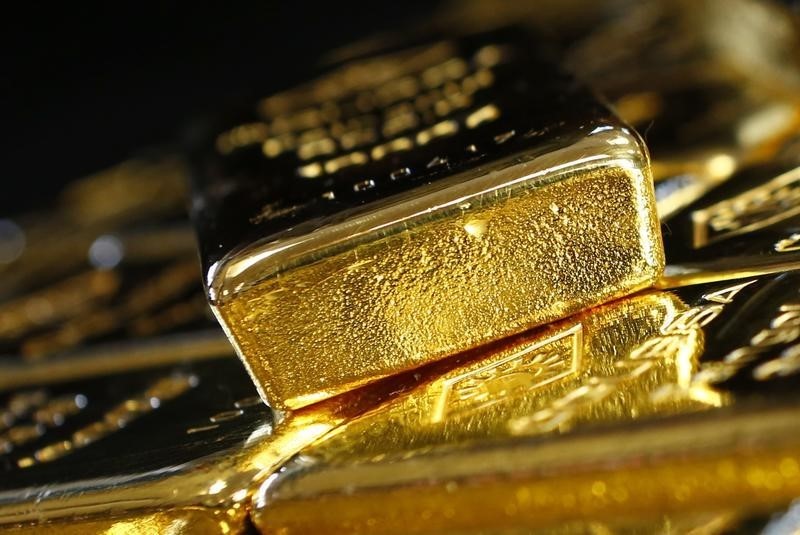
Gold dipped slightly in Asia on Tuesday with markets on watch for developments on the Korean peninsula, but otherwise noting strong equity markets and investor confidence.
Gold for June delivery on the Comex division of the New York Mercantile Exchange eased 0.15% to $1,275.65 a troy ounce. Silver futures rose 0.16% to $17.960 a troy ounce. Copper futures jumped 0.78% to $2.586 a pound.
Overnight, gold prices slumped on Monday, as investors pulled out of safe-haven assets such as gold, after pro-European candidate Emmanuel Macron won the first round of the French presidential election.
© Reuters.  Gold down in Asia
Gold suffered its biggest decline in over a month, falling more than 1%, after polls indicated Mr Macron would emerge victorious against anti-EU candidate Marine Le Pen in the run-off vote, scheduled for May 7.
The slump in gold prices, however, was capped by dollar weakness and rising geopolitical tensions.
Dollar-denominated assets such as gold are sensitive to moves in the dollar – A dip in the dollar makes gold cheaper for holders of foreign currency and thus, increases demand.
Meanwhile, North Korea stoked geopolitical tensions, after the Kim Jong-un led nation said on Sunday that it was ready to sink a U.S. aircraft carrier, as two Japanese navy ships joined a U.S. carrier group in the western Pacific.
Elsewhere, investors look ahead to details on President Donald Trump’s tax reform plan. President Donald Trump said Friday, he will unveil a tax plan on "Wednesday or shortly thereafter" that includes a “massive tax cut” for individuals and businesses.

Tuesday, 18 April 2017

Oil slides to 1-week low as focus shifts to U.S. stockpile data -- Sean Seshadri

Oil prices extended overnight losses in North American trading on Tuesday, falling to the lowest level in more than a week as investors looked ahead to weekly data from the U.S. on stockpiles of crude and refined products.
Industry group the American Petroleum Institute is due to release its weekly report at 4:30PM ET (20:30GMT) later on Tuesday. Official data from the Energy Information Administration will be released Wednesday, amid forecasts for an oil-stock drop of 1.5 million barrels.
Last week's numbers showed U.S. output helped boost crude inventories to record highs, feeding concerns about a global glut.
© Reuters.  Oil slides to 1-week low
The U.S. West Texas Intermediate crude May contract fell 38 cents, or around 0.7%, to $52.27 a barrel by 8:00AM ET (12:00GMT), after falling to an overnight low of $52.14, the cheapest since April 7.
The U.S. benchmark lost 53 cents on Monday, pressured lower by news that U.S. shale oil output was expected to post the biggest monthly rise in more than two years in May.
Elsewhere, Brent oil for June delivery on the ICE Futures Exchange in London shed 49 cents to $54.87 a barrel. The global benchmark declined 53 cents a day earlier.
U.S. drillers last week added rigs for the 13th week in a row, data from energy services company Baker Hughes showed, extending a 10-month drilling recovery.
That brought the total count to 683, the most since September 2015, underlining concern that an ongoing rebound in U.S. shale production could derail efforts by other major producers to rebalance global oil supply and demand.
OPEC agreed in November last year to curb its output by about 1.2 million barrels per day between January and June. Russia and 10 other non-OPEC producers have agreed to jointly cut by an additional 600,000 barrels per day.
In total, they agreed to reduce output by 1.8 million barrels per day to 32.5 million for the first six months of the year, but so far the move has had little impact on inventory levels.
A joint committee of ministers from OPEC and non-OPEC oil producers will meet in late April to present its recommendation on the fate of the pact. A final decision on whether or not to extend the deal beyond June will be taken by the oil cartel on May 25.
Elsewhere on Nymex, gasoline futures for May dipped 1.7 cents, or 1%, to $1.704 a gallon, while May heating oil slumped 1.2 cents to $1.620 a gallon.
Natural gas futures for May delivery lost 3.2 cents to $3.131 per million British thermal units.

Thursday, 13 April 2017

Gold prices jump in Asia on solid China trade figures - Sean Seshadri

Gold prices jumped in Asia on Thursday on solid trade figures from China, particularly on imports, and on geopolitical risk sentiment and President Donald Trump's remarks on the dollar and interest rates.
Gold for June delivery on the Comex division of the New York Mercantile Exchange gained 0.76% to $1,287.85 a troy ounce. Silver futures jumped 1.19% to $18.517 a troy ounce and copper rose 1.10% to $2.568 a pound.
China's imports soared by 31.1% in yuan terms, customs data showed on Thursday, with exports up 14.8% for the first quarter from a year ago. China reported a trade surplus of CNY454.94 billion in the period. Customs is expected to release dollar-denominated trade data later on Thursday.
© Reuters.  Gold jumps in Asia
In dollar terms, exports rose 16.4 % year-on-year in March with imports soaring 20.3%, both beating expectations, for a trade balance surplus of $23.9 billion, more than double the expected figure.
Overnight, gold prices traded higher on Wednesday, but eased from a five-month high, despite increased demand for safe-haven gold amid heightened geopolitical jitters.
Risk-off sentiment has boosted to demand for traditional safe-haven assets including gold, as investors sought refuge from the recent market volatility amid increased geopolitical concerns.
U.S. – Russia relations remained in the political spotlight, as U.S. Secretary of State Rex Tillerson was expected in Moscow on Wednesday to meet with his Russian counterpart Sergey Lavrov and discuss a number of sensitive topics including the Korean peninsula, Syria and bilateral relations.
The meeting between Tillerson and Lavrov, came fresh off the heels of comments from Russia President Vladimir Putin on Wednesday, after he said trust had eroded between the United States and Russia.
Despite, an uptick in demand for the yellow metal, market participants expected gold prices to pull back from its current highs, on the back of a more hawkish Federal Reserve and a rise in the dollar.
Geopolitical tension on the Korean Peninsula also provided support. A call on Wednesday between Chinese President Xi Jinping and U.S. President Donald Trump called for a peaceful resolution of concerns with North Korea's nuclear and missile programs.
Trump told the Wall Street Journal on Wednesday, that he thinks the currency (dollar) is getting too strong and hinted that he may reappoint Janet Yellen to chair the Federal Reserve Board when her term ends in 2018, as he added "I do like a low-interest rate policy, I must be honest with you,”
It wasn’t the first time Trump expressed concern over the strength of the dollar, after he previously warned in January, that a soaring greenback has disadvantages for U.S. companies that do a lot of business abroad.

Crude down in Asia after China says oil imports rose 15% in Q1 - Sean Seshadri

Crude prices fell in Asia on Thursday after trade data from China showed a solid gain in first quarter crude imports as investors focused on global demand and supply and shrugged off a drop in U.S. inventories.
On the New York Mercantile Exchange crude futures for May delivery was last quoted down 0.09% to $53.06 a barrel, while on London's Intercontinental Exchange, Brent eased 0.09% to $55.81 a barrel.
On Thursday, China reports trade data for March that will provide some detail on oil flows in-and-out of the country. Exports are seen up by 3.2% year-on-year in March with imports expected to surge 18% for a trade balance surplus of $10 billion.
© Reuters. Crude down in Asia
China's imports soared by 31.1% in yuan terms, customs data showed on Thursday, with exports up 14.8% for the first quarter from a year ago. China reported a trade surplus of CNY454.94 billion in the period. Customs is expected to release dollar-denominated trade data later on Thursday.
China's crude oil imports rose 15% in the first quarter compared with the same period a year earlier to 105 million metric tons, or 8.52 million barrels per day, the country's General Administration of Customs said on Thursday. Imports of refined products edged down 0.6% in the first quarter from a year ago to 7.68 million tonnes.
Later, the Paris-based International Energy Agency will release its own estimates of crude supply and demand in March.
Overnight, crude futures settled lower on Wednesday, after the latest Energy Information Administration (EIA) report showed an unexpected drop in U.S. crude stockpiles from record highs while production increased.
Oil prices spiked to the upside, after the headline U.S. crude inventories number revealed an unexpected draw but gains were short lived, as investors shifted focus to the uptick in Cushing crude storage, which rose 276,00 barrels in the week.
For the week ending April 5, The EIA said that crude oil inventories fell by 2.166 million barrels compared to estimates of an increase of 87,000 barrels. Compliance with the global deal to drain the glut in supply, averaged 104% according to production figures published by OPEC.
In November last year, OPEC and other producers, including Russia agreed to cut output by about 1.8 million barrels per day (bpd) in an effort to combat the oversupply issue that has pressured prices over the last two years.

Wednesday, 12 April 2017

Oil eases from five-week top, rising U.S. production weighs - Sean Seshadri

Crude oil eased from a five-week high on Tuesday as rising U.S. shale oil production offset concerns over geopolitical tensions in the Middle East and output cuts being made to support prices.
The international benchmark for oil prices, Brent crude futures (LCOc1), were down 20 cents, or 0.36 percent, from its previous close at $55.78 per barrel at 0702 GMT. Earlier, Brent had climbed to its highest since March 7 at $56.16 a barrel.
U.S. West Texas Intermediate (WTI) (CLc1) gave up 15 cents, or 0.3 percent, to $52.93 a barrel, after having touched a five-week high of $53.23 a barrel.
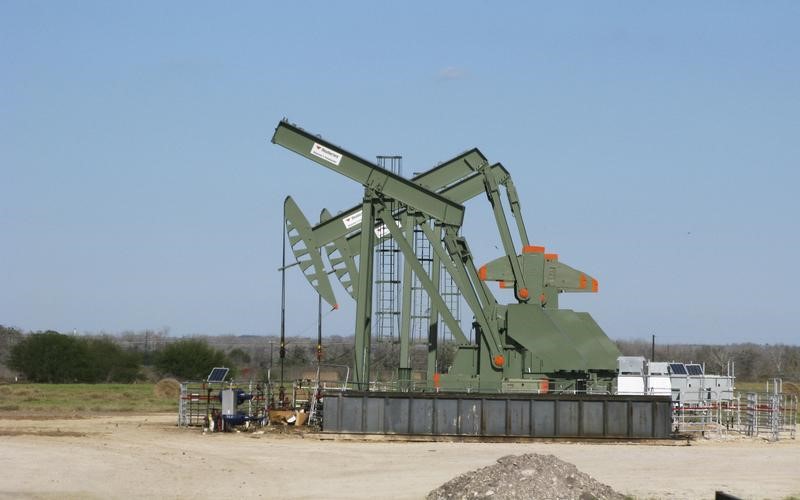
© Reuters. A pump jack used to help lift crude oil from a well in South Texas? Eagle Ford Shale formation stands idle in Dewitt County Texas
Brent has risen in each of the previous six sessions, while WTI gained for the last five days.
"We are getting into the high risk part of this rally. It has been going on for a long time," said Ric Spooner, chief market analyst at CMC Markets in Sydney.
"I wouldn't be surprised to see a bit of book squaring going on now, ahead of the U.S. inventory data which is due on Thursday morning Asia time," he said, also noting that current prices have attracted shale oil producers in the past.
U.S. crude inventories have touched record highs at both the U.S. storage hub of Cushing, Oklahoma, and in the U.S. Gulf Coast in recent weeks, according to U.S. government data.
But the market had been pushed higher by tensions following a U.S. missile strike on Syria and a another shutdown at Libya's largest oilfield.
Libya's Sharara oilfield was shut on Sunday after a group blocked a pipeline linking it to an oil terminal, a Libyan oil source said. The field had only just returned to production, after a week-long stoppage ending in early April.
The outage added to a rally that started late last week after the United States fired missiles at a Syrian government air base.
While Syria produces only small volumes of oil, the Middle East is home to more than a quarter of the world's oil output.
The focus is also turning to the start of the U.S. summer driving season, which could support prices.
The Organization of the Petroleum Exporting Countries (OPEC) and other producers have pledged to cut output by 1.8 million barrels per day in the first six months of 2017, to get rid of excess supply.
But trading data in Thomson Reuters Eikon shows that for the majority of 2017 supplies have been exceeding demand despite the OPEC and non-OPEC supply cuts.

Tuesday, 11 April 2017

Oil eases from five-week top, rising U.S. production weighs - Sean Seshadri

Crude oil eased from a five-week high on Tuesday as rising U.S. shale oil production offset concerns over geopolitical tensions in the Middle East and output cuts being made to support prices.
The international benchmark for oil prices, Brent crude futures (LCOc1), were down 20 cents, or 0.36 percent, from its previous close at $55.78 per barrel at 0702 GMT. Earlier, Brent had climbed to its highest since March 7 at $56.16 a barrel.
U.S. West Texas Intermediate (WTI) (CLc1) gave up 15 cents, or 0.3 percent, to $52.93 a barrel, after having touched a five-week high of $53.23 a barrel.
Brent has risen in each of the previous six sessions, while WTI gained for the last five days.
"We are getting into the high risk part of this rally. It has been going on for a long time," said Ric Spooner, chief market analyst at CMC Markets in Sydney.
"I wouldn't be surprised to see a bit of book squaring going on now, ahead of the U.S. inventory data which is due on Thursday morning Asia time," he said, also noting that current prices have attracted shale oil producers in the past.
U.S. crude inventories have touched record highs at both the U.S. storage hub of Cushing, Oklahoma, and in the U.S. Gulf Coast in recent weeks, according to U.S. government data.
But the market had been pushed higher by tensions following a U.S. missile strike on Syria and a another shutdown at Libya's largest oilfield.
Libya's Sharara oilfield was shut on Sunday after a group blocked a pipeline linking it to an oil terminal, a Libyan oil source said. The field had only just returned to production, after a week-long stoppage ending in early April.
The outage added to a rally that started late last week after the United States fired missiles at a Syrian government air base.
While Syria produces only small volumes of oil, the Middle East is home to more than a quarter of the world's oil output.
The focus is also turning to the start of the U.S. summer driving season, which could support prices.
The Organization of the Petroleum Exporting Countries (OPEC) and other producers have pledged to cut output by 1.8 million barrels per day in the first six months of 2017, to get rid of excess supply.
But trading data in Thomson Reuters Eikon shows that for the majority of 2017 supplies have been exceeding demand despite the OPEC and non-OPEC supply cuts.

Monday, 10 April 2017

Oil prices rise on strong demand, uncertainty over Syria conflict - Sean seshadri

Oil prices rose on Monday, supported by strong demand and uncertainty over the conflict in Syria, although another run-up in U.S. drilling activity kept a lid on gains.
Brent crude futures, the international benchmark for oil prices, were at $55.49 per barrel at 0701 GMT, up 25 cents, or 0.45 percent, from their last close.
U.S. West Texas Intermediate (WTI) crude futures were up 25 cents, or 0.46 percent, at $52.48 a barrel.
ANZ bank said that strong oil demand and "an unsettled global backdrop (is) leaving the market very finely balanced."
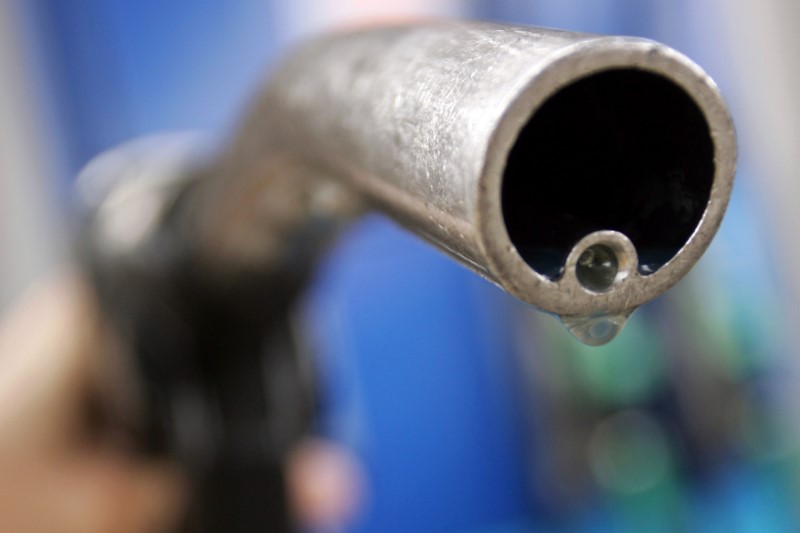
© Reuters. A motorist holds a fuel pump at a Gulf petrol station in London
However, another increase in U.S. oil drilling - for the 12th straight week and taking the count to 672 rigs, which is the highest since August 2015 - kept markets from breaking last week's one-month highs of over $56 per barrel.
U.S. bank Goldman Sachs (NYSE:GS) said after the rig data release that year-on-year U.S. oil production "would rise by 215,000 barrels per day in 2017" once a backlog of production waiting to be brought back online was taken into account.
The soaring U.S. output contrasts with a supply cut led by the Organization of the Petroleum Exporting Countries (OPEC), which hopes to prop up prices by reducing supplies in the first half of 2017 - and maybe beyond.
"The U.S. rig count continues to soar and we are close to a two-year high on that. Judging by the relative success of the OPEC agreement keeping prices propped up, I don't see a reason for that to decline in the near future," said Matt Stanley, a fuel broker at Freight Services International (FIS) in Dubai.
"Reduced OPEC volumes and stronger U.S. output will result in a deeper discount for U.S. crude and support greater exports from the U.S. to Asia over the coming months," BMI Research said. It added, though, that in terms of overall volumes, "the U.S. will remain a small player in Asia as OPEC actively protects its market share."
Beyond the United States, other producers are also benefiting from OPEC's supply cuts and tighter market.
Brazil's oil exports have soared 65 percent since February 2016, to a record of more than 1.46 million bpd, according to government data obtained by Reuters.
Consultancy Wood Mackenzie estimates Brazil oil exports will hit an average of nearly 1 million bpd for the whole of 2017, up from 798,000 bpd last year.

Friday, 7 April 2017

Weak crude oil stunts U.S. energy IPOs, boosts outlook for M&A - Sean Seshadri

The stream of U.S. energy companies going public at the start of 2017 has dried up on concerns over the future direction of oil prices, but private buyers seeking mergers and acquisitions are ready to take advantage of the volatility to secure cheap deals.
Texas-based FTS International and Select Energy Services are among six U.S. energy companies that filed for listings in the first quarter but delayed, even after receiving the green light from local regulators, Thomson Reuters data showed.
Four U.S. oil and gas companies went public in January, when more stable crude prices gave them confidence to tap into investor demand after a barren listings period that followed a slump in U.S. crude (CLc1) prices in late 2015.
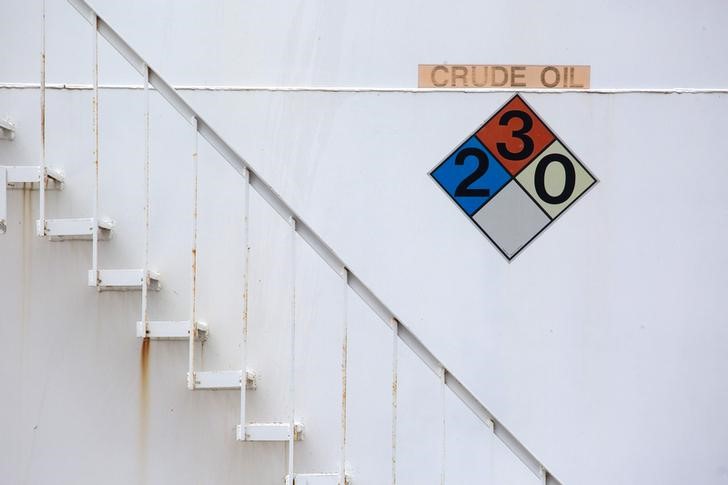
© Reuters. FILE PHOTO: A sign listing the contents of an oil storage tank is seen during a tour by the Department of Energy at the Strategic Petroleum Reserve in Freeport
Share prices for that quartet tumbled 14 percent on average by March 31, according to Thomson Reuters data, as crude prices retreated to end the first quarter 6.5 percent lower, the biggest quarterly decline since late 2015.
Two Canadian oilfield services firms, STEP Energy Services and Source Energy, pulled their March public offerings due to adverse market conditions, further undermining the case for energy IPOs.
"There was talk of upwards of 20 IPOs getting ready to go at the start of the year, but now everyone is slowing down their processes as share prices have gone down as rapidly increasing production raised concerns about how fast and how far the recovery in oilfield activity would go,” said Brian Williams, managing director at Carl Marks Advisors.
Most are in the oilfield services sector, with many looking to relist and raise fresh capital after going through bankruptcy proceedings during the last oil price downturn.
With the sharp cost cutting by oil producers in the last 18 months continuing to hurt profits at service firms, companies that listed in 2017 often did so based on expected performance for coming years. Sliding crude prices in March undermined hopes for future growth.
"The market was looking past current conditions to 2018 and 2019 projections with valuations of eight or nine times 2018 EBITDA (earnings before interest, tax, depreciation and amortization), on the assumption that if you wanted to get in ahead of the future upside, you'd have to pay now," said Williams.
SWITCHING TRACK
Bankers said that lower IPO valuations and lingering caution on oil prices would encourage energy companies to sell themselves to private buyers instead.
Some are owned by distressed debt investors and hedge funds that bought them out of bankruptcy and could still secure a substantial profit even though valuations have declined in recent weeks.
Such a switch in focus should not be too difficult. Many IPO processes have been run as dual-track, where concurrent attempts to list and sell the company are made by advisors. Private equity and similar investors seeking energy assets have adequate capital.
"In the current market, when the IPO valuations start to come down, if buyers are still optimistic, the sale proceeds might be more attractive to sellers than what they would get in an IPO," said Jeffery Malonson, a capital markets partner at King & Spalding.
He noted the owners would also secure the benefit of a full exit from their investment as opposed to a partial one through a listing.
Companies could also use the delay in listing plans to bulk up their own operations using acquisitions, which will mean they have bigger and more valuable companies when they eventually go public.
This is particularly true for oilfield services and equipment providers, which need to cut costs in the face of stalling cash flows and shrinking capex, bankers said.
Improved scale was seen as one of the main drivers of Schlumberger NV's (N:SLB) agreement last month to form a $535 million joint venture with Weatherford International Plc (N:WFT) to deliver oilfield products and services for unconventional resource plays in the United States and Canada.
While some could fund deals with their own reserves, others will need to borrow cash. With banks likely reluctant to lend substantial sums to recently-restructured companies, private equity firms and other non-bank lenders could step in here as well. However, terms for borrowers would be more onerous than they would get at banks.
Thursday, 6 April 2017

Gold gains in Asia as Fed views on rates mulled - Sean Seshadri

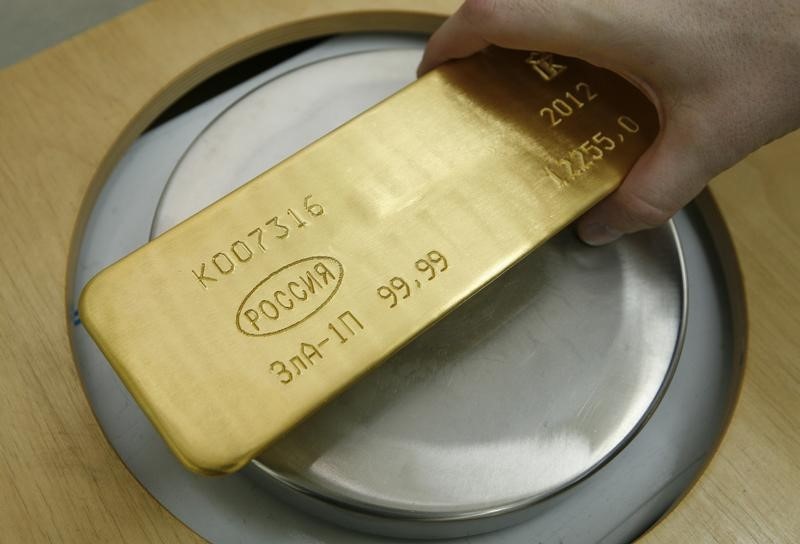
Gold gained in Asia on Thursday as investors parsed the latest Fed minutes for the pace of expected rate hikes and a weaker dollar supported demand.
Some saw the Fed minutes as a bit less hawkish than expected and as uncertainty swirls around President Donald Trump's plans to cut taxes and boost spending as policy makers said the outlook had changed little since January with further strengthening of the labor market and progress towards the inflation target and that rate hikes are likely ahead in line with a forecast for three this year.
But members were split over whether stronger inflation warranted faster hikes now or a more gradual pace given the persistence of low inflation in the past.
Gold gains in Asia
Later on Thursday, markets will keep close tabs on comments from a summit meeting of Trump and Chinese President Xi Junping in Florida. In China, the Caixin services PMI for March came in a six-month low of 52.2, below expectations.
Gold for April delivery on the Comex division of the New York Mercantile Exchange rose 0.70% to $1,257.25 a troy ounce. Copper futures on the Comex dropped 0.34% to $2.668 a pound.
Overnight, gold prices eased from one-month highs on Wednesday, pressured by a surge in the dollar, after the release of bullish U.S. private sector job growth.
Gold futures struggled to hold onto gains before turning negative, after ADP and Moody's Analytics said U.S. private employers added 263,000 jobs for the month. That was well above economists’ expectations of 187,000. The stronger than expected private payrolls report raised expectations for a bullish Labor Department Nonfarm payrolls report expected to be released on Friday.
Meanwhile, a slowdown in the services sector capped selling pressure in the yellow metal, after a report from the Institute for Supply Management showed that non-manufacturing activity slowed more than expected to 55.2 from 57.6 in February.
Gold is sensitive to moves in U.S. rates, which lift the opportunity cost of holding non-yielding assets such as bullion.

Wednesday, 5 April 2017

Gold dips in Asia after NKorea test, awaits ADP jobs data - Sean Seshadri

Gold dipped in Asia on Wednesday as investors noted political risk from the launch of a medium-range ballistic missile by North Korea ahead of a summit between U.S. President Donald Trump and Chinese President Xi Jinping this week that will discuss the Korean peninsula in addition to trade and looked ahead to jobs figures from ADP for further clues on the next likely Fed rate hike.
Gold for April delivery on the Comex division of the New York Mercantile Exchange dipped 0.05% to $1,257.75 a troy ounce. Silver futures on the Comex, edged down 0.16% to $18.2933 a troy ounce while copper futures were last quaoted weaker at 2.616 a pound.
© Reuters. Gold down in Asia
Overnight, gold prices traded close to one-week highs on Tuesday, despite a leap in the U.S. dollar, after the release of bullish U.S. trade data.
Gold continued to trade within narrow range with upside bias throughout the session, but a firmer dollar capped momentum in the yellow metal, after bullish trade data, showed that the U.S. trade deficit narrowed by more than expected in February.
The Commerce Department said Tuesday, the trade deficit shrank by 9.6% to $43.6 billion, while January's trade deficit was revised down to $48.2 billion from $48.5 billion.
Economists had forecast the trade gap contracting to $44.8 billion in February.
Investors poured into the yellow metal, which is considered a safe haven asset, ahead of a crucial meeting on Thursday between U.S. President Donald Trump and Chinese President Xi Jinping.
Meanwhile, a flurry of hawkish comments from Federal Reserve officials over the past week failed to dampen demand for gold.
Philadelphia Fed President Patrick Harker said on Monday, the Federal Reserve should raise interest rates twice more this year, provided growth in the labor market and inflation momentum continues.
According to Investing.com’s Fed Rate monitor tool, 50% of traders expect a June rate hike. Gold is sensitive to moves in U.S. rates, which lift the opportunity cost of holding non-yielding assets such as bullion.

Tuesday, 4 April 2017

Gold builds on gains to reach 1-week high - Sean Seshadri

Gold prices firmed in European trading on Tuesday, extending gains into a third session as investors turned their attention to U.S. trade data ahead of President Donald Trump's meeting with Chinese President Xi Jinping.
Comex gold futures rose $5.80, or around 0.5%, to $1,259.80 a troy ounce by 2:55AM ET (06:55GMT), after hitting an overnight high of $1,260.15, its strongest level in a week. Meanwhile, spot gold was up $4.20 at $1,257.80.
Prices of the yellow metal ended gained $2.80 on Monday as investors parsed through mixed manufacturing data and weaker-than-expected auto sales numbers.
© Reuters.  Gold hits 1-week high
Also on the Comex, silver futures for May delivery tacked on 15.0 cents, or about 0.8%, to $18.36 a troy ounce. It reached its highest since March 2 at $18.37 earlier.
The U.S. trade deficit data is scheduled for release Tuesday at 8:30AM ET. Economists expect it to have narrowed in February to $44.8 billion from a five-year high of $48.5 billion a month earlier.
The main focus for markets this week centers on President Donald Trump's first meeting with Chinese counterpart Xi Jinping on Thursday and Friday.
Last week, Trump tweeted that the meeting, which is expected to cover differences over trade and North Korea, "will be a very difficult one."
That has kept investors on edge, knocking riskier assets, such as stocks, and forcing investors to seek shelter in safe-haven assets such as the yen, gold and U.S. Treasuries.
The U.S. dollar index was at 100.44 in London morning trade, keeping distance from last week's four-and-a-half month low of 98.67.
The 10-year U.S. Treasury yield fell to 2.33%. It touched a five-week low of 2.321% overnight.
Market experts do not expect the Federal Reserve to raise interest rates again until June. Futures traders are pricing in around a 50% chance of a hike at the Fed's June meeting, according to Investing.com’s Fed Rate Monitor Tool. Odds of a September increase was seen at about 75%.
The precious metal is sensitive to moves in U.S. rates, which lift the opportunity cost of holding non-yielding assets such as bullion. A gradual path to higher rates is seen as less of a threat to gold prices than a swift series of increases.
Elsewhere in metals trading, platinum tacked on 0.1% to $959.40, while palladium added 0.2% to $804.20 an ounce.
May copper futures ticked down 0.3 cents to $2.600 a pound.